

 Facebook
 X
X
 Pinterest
 Copy Link
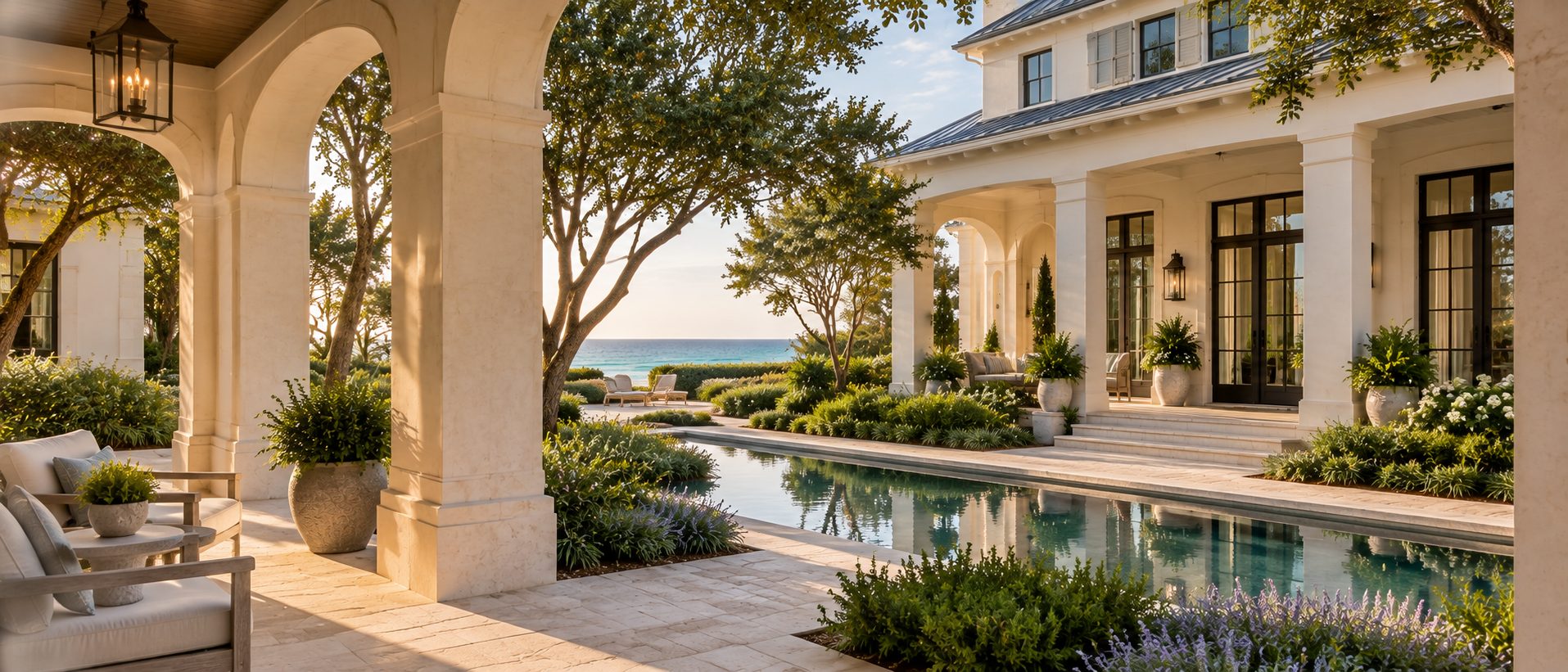
A luxury home can be deeply personal and still deserve an objective look at what will protect its value over time.
A home along the coast can be many things at once.
It can be the place your family gathers.
The place you escape to when life has been especially demanding.
A home that eventually becomes part of your retirement plan.
Or simply a place you walked into and knew you wanted to own.
Those are meaningful reasons to buy a home. I don’t believe every real estate decision has to begin with a spreadsheet or end with a calculation of return.
But I do believe something else.
A home can be personal and still deserve objective evaluation.
Especially when you are making a significant investment in coastal real estate.
Loving the Home and Evaluating the Asset Are Not Opposing Ideas
Sometimes buyers hesitate to think about a home in financial terms because doing so seems to take something away from the experience.
I see it differently.
Understanding the asset can actually give you greater freedom to enjoy the home.
You can love the view and still ask whether it can reasonably be protected.
You can appreciate the architecture while considering how its materials will perform in a coastal environment.
You can choose a community because you love spending time there while also understanding how that community is managed.
You can plan to keep a home for many years while still thinking about how another buyer might view it someday.
Those aren’t conflicting priorities.
They are different sides of the same decision.
It’s one of the reasons I believe what truly protects value in coastal luxury real estate deserves consideration well beyond the purchase price.
Start With What Cannot Easily Be Changed
Luxury homes can be renovated.
Kitchens can be redesigned. Finishes can be replaced. Outdoor spaces can be reimagined.
But some of the most important characteristics of a property are far more difficult—or impossible—to change.
Its location.
Its relationship to the water.
Its lot.
Its privacy.
Its orientation.
The surrounding properties.
The character of the community.
And, in some cases, the fundamental quality of the architecture itself.
I tend to pay close attention to those things because they continue influencing a property long after today’s finishes have changed.
We’ve already looked at why some beautiful homes age better than others, and much of that distinction begins with qualities deeper than what is currently fashionable.
Not Everything Expensive Is Scarce
This is an important distinction in luxury real estate.
Price and scarcity are not the same thing.
A home may contain expensive materials, exceptional appliances and beautiful finishes. Those can certainly contribute to its appeal.
But many of them can also be recreated.
Other qualities cannot.
A particularly good homesite. An unusually private setting. A compelling view corridor. Thoughtful placement within a desirable community. Architecture that makes sense for both the property and the environment.
Those characteristics deserve careful attention because another owner cannot simply add them later.
When I evaluate a luxury property with a client, I want to understand what we are actually paying for.
That question often reveals more than the list of features.
Consider the Cost of Protecting What You Own
Purchase price is only the beginning of ownership.
Coastal homes have their own maintenance considerations. Insurance matters. Exterior materials matter. Landscaping matters. Mechanical systems matter. Association responsibilities can matter.
For second-home owners, there is another consideration: what happens while you’re away?
That doesn’t make coastal ownership undesirable. It simply makes understanding the property important.
In what changes when a coastal home becomes your second home, I talked about the difference between evaluating a property as a visitor and evaluating it as an owner.
The same distinction applies here.
A property that requires substantial ongoing attention may be perfectly appropriate for one owner and frustrating for another.
The better question isn’t whether a home is expensive to maintain.
It’s whether the ownership demands make sense for you and for the way you intend to use it.
Value Isn’t Only About Resale
This is where I think luxury ownership deserves a little more nuance.
There are improvements or choices you might make knowing they will never return every dollar at resale.
That doesn’t automatically make them poor decisions.
Perhaps you create an outdoor space your family uses nearly every evening.
Perhaps you change a room to accommodate aging parents or grandchildren.
Perhaps you invest in something that makes the property significantly easier for you to own.
If you understand the tradeoff and the decision meaningfully improves your experience for the next ten years, there can be real value in that.
The important part is knowing which kind of value you are creating.
Financial value.
Functional value.
Personal value.
Sometimes all three align.
Sometimes they don’t.
A thoughtful owner understands the difference.
Think About the Home Beyond Today’s Market
Luxury markets change.
Design preferences change.
Buyer expectations change.
Even the way your own family uses a property can change.
That is why I prefer to evaluate a home beyond the conditions that exist at the moment you’re buying it.
If a second home may eventually become something more important in your family’s life, when a second home becomes part of your long-term plan, the questions surrounding the property naturally change.
You begin thinking less about a particular season and more about adaptability.
Can the home evolve with you?
Will the location continue to make sense?
Are the qualities you value today likely to remain meaningful?
Does the property give you options?
Flexibility is easy to overlook when everything about the future feels distant.
It can become extraordinarily valuable later.
The Third Perspective: Enjoyment and Stewardship Can Coexist
I don’t believe you have to choose between buying with your heart and buying with your head.
The better decisions usually make room for both.
A coastal home can bring tremendous enjoyment to your life. It can become the setting for years of memories and experiences that cannot be measured on a financial statement.
And it can still be an asset worthy of thoughtful stewardship.
My role isn’t to take the emotion out of buying a home.
It is to make sure the emotion doesn’t prevent us from seeing the whole decision.
Because when you find a coastal home you truly love, protecting what makes it valuable can help you enjoy it with even greater confidence.
Kim Francks
Your Journey. Your Home. Your Story—Guided with Care.
