

 Facebook
 X
X
 Pinterest
 Copy Link
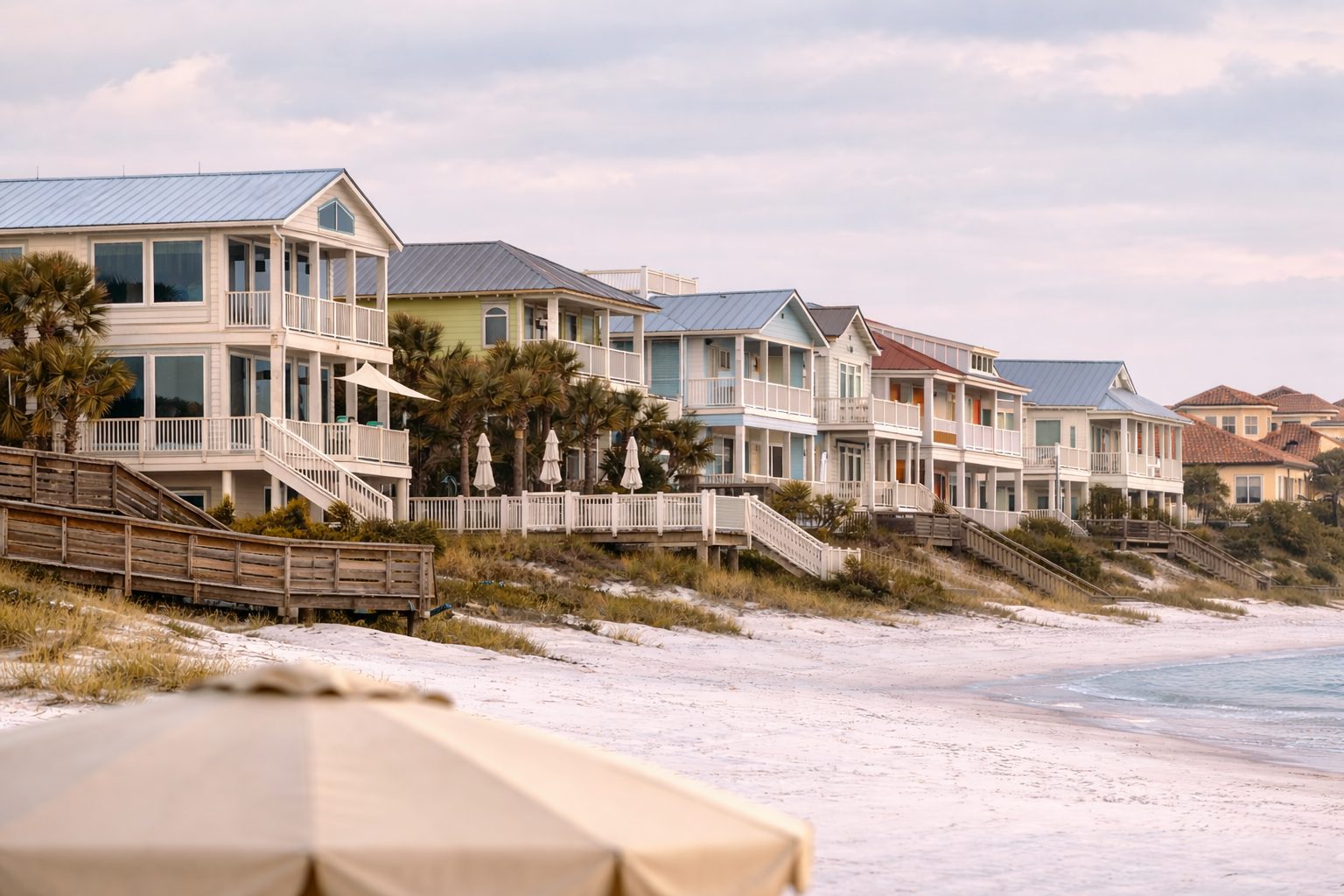
When buyers begin exploring homes along Scenic Highway 30A, the focus often starts with the property itself.
Architecture.
Views.
Interior design.
Outdoor living spaces.
Those things matter.
But experienced buyers usually understand something else fairly quickly: the long-term experience of owning a home is shaped just as much by the community surrounding it. Many of these considerations are part of the hidden factors that shape luxury home decisions, especially in coastal markets like those along 30A.
That’s why evaluating a coastal property often begins with understanding the neighborhood it belongs to.
Community Character Shapes Daily Living
Luxury coastal communities each develop their own rhythm over time.
Some are designed for quiet residential living.
Others support a vibrant vacation rental environment.
Some blend both.
Understanding that character helps buyers determine whether a community will continue to feel comfortable years after the purchase.
A home that fits beautifully within its environment tends to hold both its appeal and its value more consistently.
Density Influences Long-Term Experience
Density is one of the most overlooked factors in coastal real estate.
How closely homes are placed together.
How development is planned.
How infrastructure supports the neighborhood.
These elements affect everything from privacy to traffic patterns to the overall sense of calm within a community.
Thoughtful buyers often look beyond the home itself to understand how the surrounding area functions as a whole. These are often what high-end buyers often miss when evaluating coastal property for the first time.
Rental Patterns Matter
Along 30A, many communities include homes used as vacation rentals.
This can be part of what makes the area vibrant and attractive to visitors.
But the balance between residential ownership and short-term rental activity can shape the experience of living there.
Buyers who plan to spend extended time in their homes often take time to understand how rental activity is structured within a community.
Rental guidelines, property management standards, and neighborhood expectations all play a role.
Architectural Consistency Protects Value
One of the qualities that distinguishes many well-regarded coastal communities is architectural consistency.
When homes follow a thoughtful design language, the neighborhood tends to feel cohesive and well cared for.
Over time, this consistency often helps preserve the character that attracted buyers in the first place.
Communities that maintain architectural standards frequently see stronger long-term value stability as a result.
Understanding the Coastal Landscape
Another important element is how a community fits within the natural landscape of the coast.
Dune preservation.
Access to the Gulf.
Relationship to nearby towns and amenities.
These details shape both the visual identity of a neighborhood and the experience of living there.
For buyers exploring homes along Scenic Highway 30A, understanding the distinctions between these coastal communities can offer valuable perspective.
A Community Is Part of the Investment
Luxury homes along the coast are rarely evaluated in isolation.
The surrounding environment, planning philosophy, and community culture all contribute to how a property performs over time.
When buyers understand those elements early in the process, they can make decisions with far greater confidence.
Because a home is never just a structure.
It is part of a place.
And the right place often makes all the difference.
Kim Francks
Your Journey. Your Home. Your Story—Guided with Care.
