

 Facebook
 X
 Pinterest
 Copy Link
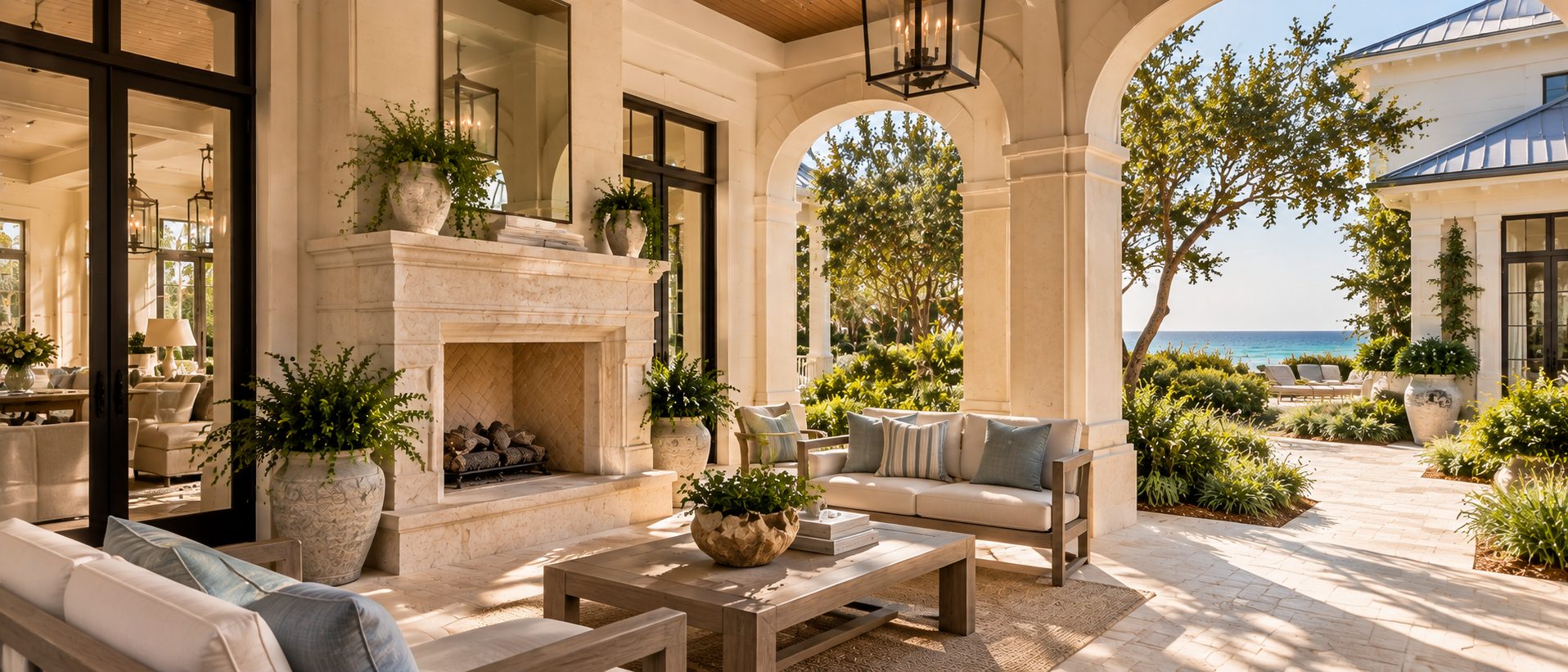
Thoughtful improvements begin with understanding what makes a property valuable in the first place.
Owning a luxury coastal home often comes with ideas about what you might eventually change.
Perhaps you want to redesign an outdoor living area, update a kitchen, open up a floor plan, or make the home more comfortable for the way your family uses it.
Those can be worthwhile improvements.
But before making significant changes to a coastal property, I believe there’s an important question worth asking:
What are we trying to protect?
It’s a question that can change how you approach the entire project.
Not Every Improvement Makes a Home Better
When homeowners begin considering renovations, the conversation often centers on what they want to add or replace.
A larger kitchen.
A more expansive outdoor entertaining space.
New materials and finishes.
A different architectural feature.
Those ideas may be appealing, but an improvement should be evaluated in the context of the entire property.
A beautiful home has relationships between its architecture, setting, proportions, materials, and surrounding environment.
Changing one element can affect the others.
A renovation that looks impressive on its own may not strengthen the property as a whole.
That’s why I encourage homeowners to look beyond the proposed improvement and consider what it means for the home’s long-term character and function.
Understand What Makes the Property Special
Every luxury coastal home has qualities that contribute to its appeal.
Some are obvious, such as Gulf views, generous outdoor living areas, or distinctive architecture.
Others are less immediately noticeable.
The way natural light enters the home.
The privacy created by the original landscape design.
The relationship between interior rooms and outdoor spaces.
The proportions that make the architecture feel balanced.
The materials that give the home its sense of permanence.
These qualities deserve attention before renovation decisions are made.
In Why Some Beautiful Homes Age Better Than Others, I explored how thoughtful design and enduring architectural choices contribute to a home’s long-term appeal.
That same perspective applies when deciding what to change.
Sometimes the most valuable improvement is one that preserves what already works.
Coastal Conditions Deserve Their Own Consideration
Along Scenic Highway 30A, a renovation involves more than appearance.
Salt air, humidity, wind exposure, drainage, and ongoing maintenance can influence how well certain materials and improvements perform over time.
A material that looks beautiful in a showroom may require considerably more attention in a coastal environment.
An exterior feature may create maintenance responsibilities that weren’t part of the original design.
Changes to landscaping, hardscaping, or drainage may also affect how the property functions.
For properties near the Gulf, applicable building requirements, flood considerations, association rules, and environmental restrictions can further influence what is practical or permissible.
These are matters to review with qualified architects, contractors, engineers, insurance professionals, and local authorities before work begins.
I don’t believe these considerations should discourage owners from improving their homes.
I believe they should inform the decisions.
As I discussed in What Truly Protects Value in Coastal Luxury Real Estate, long-term value is influenced by more than appearance or purchase price.
The ability to maintain and protect the property matters, too.
Consider How the Improvement Will Affect Daily Life
A renovation can be financially sensible and still fail to improve the way you live.
That’s why I think it’s important to understand the purpose behind a proposed change.
Will the improvement make the home more comfortable?
Will it simplify maintenance?
Will it improve privacy?
Will it allow family members and guests to use the property more easily?
Or is it primarily responding to a design trend that may not remain appealing?
The answers will be different for every homeowner.
A family that spends several months each year along 30A may have very different priorities from someone who visits only occasionally.
An owner planning to retire in the home may approach accessibility, room arrangements, and outdoor spaces differently from someone who expects to sell within a few years.
Neither approach is necessarily better.
The important thing is making decisions that reflect how the property is actually intended to serve you.
In The Best Luxury Homes Support the Life You Want to Live, I discussed why a home’s value extends beyond its features.
That principle remains just as important after the purchase.
Be Careful About Improving Away What Makes a Home Distinctive
Luxury homeowners have access to extraordinary design possibilities.
But more elaborate doesn’t always mean more valuable.
A home with restrained, timeless architecture may lose some of its character when too many competing design elements are introduced.
A thoughtfully landscaped property may become less appealing if mature vegetation is removed without considering its contribution to privacy and setting.
An outdoor area designed for quiet enjoyment may function differently after being transformed into a large entertaining space.
These aren’t arguments against change.
They’re reasons to approach change with intention.
I would rather see an owner understand the strengths of a property and build upon them than spend significantly to create something that works against the home’s original character.
Financial Value and Personal Value Are Different
Not every improvement needs to produce a measurable return at resale.
I think that distinction is especially important for owners who plan to enjoy their coastal homes for many years.
A renovation that makes the property more comfortable for your family may be worthwhile even if a future buyer doesn’t place the same value on it.
At the same time, highly personalized changes can narrow the appeal of a home when it eventually returns to the market.
Both considerations deserve an honest discussion.
In The Coastal Home You Love Still Has to Be a Good Asset, I explored the relationship between personal enjoyment and responsible ownership.
The same balance applies here.
You should be able to enjoy your home in a way that is meaningful to you.
But you should also understand which improvements may preserve market appeal, which primarily serve your personal preferences, and which could create unintended costs or limitations.
Informed decisions make room for all three.
Sometimes the Best Decision Is to Wait
Not every idea needs to become an immediate project.
If you’ve recently purchased a coastal home, spending time living in it can reveal things you wouldn’t necessarily recognize during the buying process.
You may discover that a room functions better than expected.
That an outdoor area receives more sun or wind than you anticipated.
That a particular view becomes part of your daily routine.
Or that something you initially planned to change is actually one of the home’s strongest features.
There can be real value in understanding the rhythm of a property before making permanent changes.
Preparation isn’t the opposite of progress.
Often, it is what makes progress more successful.
The Third Perspective: Protect the Whole Property, Not Just the Improvement
When I think about luxury real estate, I don’t look at decisions in isolation.
I look at how they connect.
An improvement affects the home.
The home exists within a particular setting.
And the property is part of a larger financial and personal plan.
Those relationships matter.
My role as a real estate advisor is to help clients consider the broader implications of their choices, including how a property may be perceived and valued in the market. Qualified design and construction professionals bring the technical expertise needed to evaluate and execute the work itself.
A well-considered improvement should have a clear purpose.
It should respect the qualities that make the property desirable.
And it should support the way you intend to live, without overlooking the consequences that may follow.
Because protecting a luxury coastal home doesn’t mean refusing to change it.
It means understanding what deserves to remain valuable as the home evolves.
Kim Francks
Your Journey. Your Home. Your Story—Guided with Care.
